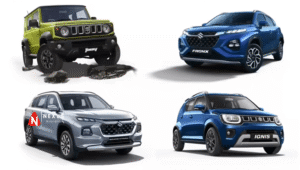
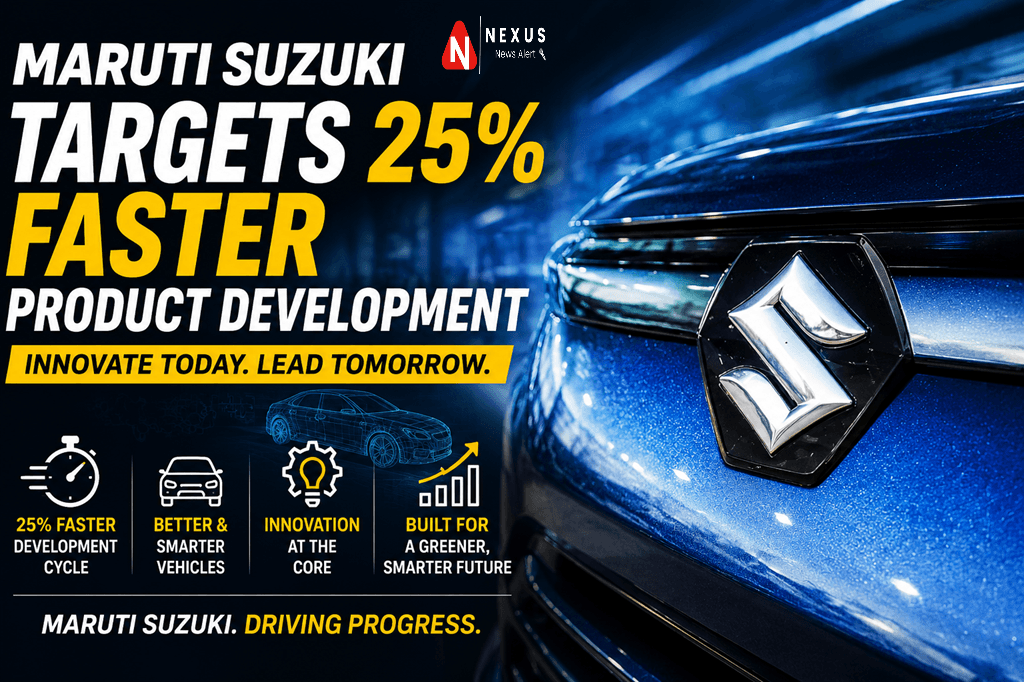
Mumbai, 8 June 2026 — Maruti Suzuki is aiming to reduce vehicle development timelines by 25%, cutting the process from 48 months to 36 months. This aggressive push comes as the company prepares for one of its biggest product offensives — launching nine new models over the next three years, including seven SUVs.
The move is driven by the need to keep pace with intensifying competition, shorter product cycles, and the growing demand for SUVs, electric vehicles, hybrids, CNG, and flex-fuel models.
Key Focus Areas for Faster Development
- Digital Engineering: Increased use of simulation-led development, virtual validation, and digital testing to reduce physical prototypes.
- AI & Machine Learning: To identify issues earlier and improve efficiency.
- Concurrent Engineering: Vehicle development, component design, tooling, and manufacturing will progress simultaneously.
- Higher Localisation: Targeting over 80% localisation from the start of production.
- Supplier Collaboration: Involving suppliers earlier in the development process.
This strategy will help Maruti manage multiple powertrain options (petrol, CNG, hybrid, flex-fuel, and EV) more efficiently while maintaining quality and reliability standards.
Also Read : Top 10 Most Sold Scooters April 2026: Honda Activa Dominates, Hero Destini Surges Massively
Why This Matters
Utility vehicles now dominate Maruti Suzuki’s sales, making faster development critical to stay ahead in India’s most competitive segment. The company is also expanding manufacturing capacity to support a more diverse product mix.
Maruti Suzuki Targets 25 Percent Faster Product Development as it gears up for an intense phase of new model launches, aiming to strengthen its position in a rapidly evolving market.
Also Read : Royal Enfield Guerrilla 450 — First Ride Review
10 FAQs on Maruti Suzuki’s Development Push
Q1. What is Maruti Suzuki’s new development timeline target?
A: Reduce from 48 months to 36 months (25% faster).
Q2. How many new models will Maruti launch in the next three years?
A: Nine new models, including seven SUVs.
Q3. What technologies will Maruti use for faster development?
A: Simulation, virtual validation, AI, and machine learning.
Q4. Will this affect vehicle quality?
A: No — the focus is on efficiency while maintaining high standards.
Q5. What powertrains will future models offer?
A: Petrol, CNG, hybrid, flex-fuel, and electric variants.
Q6. Why is faster development important now?
A: To match rivals’ aggressive SUV launches and shorter product cycles.
Q7. What role will suppliers play?
A: Earlier involvement for better coordination and localisation.
Q8. Will Maruti increase localisation levels?
A: Yes, targeting over 80% localisation from the start.
Q9. How will this impact customers?
A: Faster access to newer models with advanced features.
Q10. When will the new models start arriving?
A: Over the next three years, starting soon.
Verdict
Maruti Suzuki’s decision to slash development time by 25% signals a bold and necessary shift. With intense competition in the SUV space and the rise of multiple powertrains, faster product development will be key to maintaining leadership. The strategy combines digital tools, supplier collaboration, and higher localisation to deliver fresh models more quickly without compromising quality.
Let me know if you need any changes!