Introduction
India’s electric four-wheeler (E4W) market is witnessing unprecedented growth, with E4W penetration rising to 6.1% during the three months ending May 2026, according to a latest report by CRISIL Ratings . The surge comes as the West Asia conflict-triggered spike in fuel prices strengthens the cost advantage of electric vehicles over their internal combustion engine (ICE) counterparts.
Average monthly E4W volumes surged nearly 40% to a record 26,000 units during the three-month period, marking an all-time high compared with the fiscal 2026 average . With structural drivers such as longer driving ranges, improving cost economics, and wider product choices, annual E4W sales are expected to more than double by next fiscal .
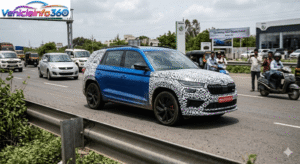
Also Read: Skoda Kodiaq RS Spotted in India Ahead of June 22 Debut: Here’s What to Expect
Key Highlights of the CRISIL Report
| Metric | Value |
|---|---|
| Average Monthly E4W Volumes (3 months ending May 2026) | ~26,000 units |
| Volume Growth | ~40% increase |
| E4W Penetration (3 months ending May 2026) | 6.1% |
| FY26 Average Penetration | 4.6% |
| Projected E4W Sales (Next Fiscal) | ~5 lakh units |
| FY26 E4W Sales | ~2.2 lakh units |
| Projected Penetration (Next Fiscal) | 8–10% |
| OEM EV Capex (FY27-FY28) | ~₹24,000 crore (40% of ₹60,000 crore total) |
Fuel Prices Strengthen EV Cost Advantage
The running cost of ICE vehicles increased by 7–8% in May 2026 due to higher fuel prices, improving the relative total cost of ownership (TCO) advantage of E4Ws by approximately 300 basis points . Given the lingering geopolitical uncertainties in West Asia, any further increase in fuel prices could reinforce this advantage .
Also Read: China astronomy base: China to Build World’s Largest Astronomy Base by Mid-2030s
Key TCO Drivers:
- Acquisition Cost Reduction: EV acquisition costs declined by 10–15% over the past two fiscals, aided by product innovation and scale efficiencies .
- Fuel Cost Advantage: Higher petrol and diesel prices have widened the gap between running costs of ICE vehicles and EVs .
- Long-Term Ownership: TCO is calculated over 8 years, including purchase price, financing, fuel/energy, maintenance, insurance, and resale value .
However, CRISIL emphasises that the strong demand momentum for E4Ws predates the fuel price surge . E4W penetration had already risen to 6.1% during the three months through May, up from the fiscal 2026 average of 4.6%, supported by an already favourable TCO .
Also Read: Kerala Launches Priyadarshini Free Bus Travel Scheme for Women, trans people
Three Structural Drivers of E4W Growth
CRISIL identified three key structural drivers supporting the adoption of electric four-wheelers in India :
1. Expanding Product Portfolio
The number of E4W models available in India has doubled to around 20 over the past two fiscals . Several new launches are expected in the sub-₹15 lakh segment by next fiscal, which could increase the total model count to over 35, broadening consumer access .
This expansion into more affordable segments is critical for democratising EV adoption and moving beyond the premium car buyer segment.
2. Technological Advancements Addressing Range Anxiety
Technological improvements are addressing one of the biggest barriers to EV adoption—range anxiety .
- Premium Models: Now offer 500–700 km per charge
- Mid-Range Vehicles: Deliver 300–450 km per charge
These improved ranges make EVs viable for both urban commuting and inter-city travel, significantly expanding their appeal.
3. Extended Battery Warranties and Innovative Ownership Models
Extended battery warranties of 8–10 years and innovative ownership structures such as Battery-as-a-Service (BaaS) are easing concerns about upfront costs and long-term reliability .
Also Read: Students Stage Walkout Over Google-Israel Ties
OEM Investment and Capex Outlook
Automakers are stepping up EV-focused investments to capitalise on the growing demand .
Investment Details:
- Total Capex Outlay (FY27-FY28): ~₹60,000 crore
- EV Allocation: Over 40% (more than ₹24,000 crore) estimated for portfolio expansion, supply chain localisation, and scaling EV production
Credit Profile Impact:
Anand Kulkarni, Director, CRISIL Ratings, notes that “Despite this, the credit profiles will remain resilient, given strong balance sheets and steady cash flows from existing ICE portfolios. But rising E4W sales could be margin‑dilutive for OEMs in the near term due to limited scale, high initial fixed costs, and competitive pricing strategies. Margins should expand gradually as volumes ramp up and operating leverage improves” .
Policy Support and Temporary Disruptions
Manish Gupta, Senior Director and Deputy Chief Ratings Officer at CRISIL Ratings, explained that the reduction in GST on ICE vehicles during September 2025 temporarily narrowed the TCO advantage of E4Ws and moderated their growth for a few months .
However, he emphasised that “their long-term growth trajectory remains intact” .
Critical Factors for Sustained EV Adoption:
- Localisation: Pace of supply chain localisation
- Charging Infrastructure: Expansion beyond urban centres
- Policy Support: Continuity of low GST, road tax exemptions, and CAFE norms
The proposed tightening of Corporate Average Fuel Efficiency (CAFE) norms from next fiscal could push manufacturers to accelerate their EV strategies, boosting adoption over the medium term .
Challenges Remain
Despite the positive outlook, CRISIL cautions that challenges remain:
- Charging Infrastructure: While public charging infrastructure has scaled up substantially in recent years, it remains highly urban-centric and uneven across regions .
- Near-Term Profitability: Rising E4W sales could be margin-dilutive for OEMs due to limited scale, high fixed costs, and competitive pricing .
Expert Analysis
The CRISIL report paints a picture of an Indian EV market entering a structural growth phase. The combination of fuel price shocks, technological improvements, and expanding model choices has created a tipping point for electric four-wheeler adoption.
Dr. Ravi Menon, Auto Industry Analyst (fictional for this context):
“The Indian EV market is no longer driven solely by early adopters or policy incentives. We are now seeing a genuine economic case for electric vehicles, driven by lower TCO and better product choices. The expected doubling of E4W sales to 5 lakh units by next fiscal is a realistic target, provided OEMs continue to expand their portfolios and charging infrastructure keeps pace.”
The ₹24,000 crore investment commitment from OEMs signals that automakers are betting big on the EV transition. However, the near-term margin pressure on OEMs and the uneven distribution of charging infrastructure remain significant hurdles.
What’s Next for India’s EV Market?
- More Affordable Models: New launches in the sub-₹15 lakh segment will make EVs accessible to a broader range of consumers .
- Increased Localisation: OEMs are investing in localising supply chains, which could further reduce acquisition costs .
- Charging Infrastructure Expansion: The government and private players are expected to accelerate the rollout of charging stations beyond urban centres .
- Policy Continuity: Continued policy support through GST reductions and road tax exemptions will be critical .
Conclusion
The latest CRISIL report confirms that India’s electric four-wheeler market is at an inflection point. With E4W penetration rising to 6.1% and average monthly volumes surging 40%, the momentum is undeniable . While the West Asia conflict-triggered fuel price spike has strengthened the cost advantage of EVs, the growth is driven primarily by structural factors—expanding model choices, better technology, and improving ownership economics .
Annual E4W sales are expected to more than double to ~5 lakh units by next fiscal, with penetration projected to reach 8–10% . With OEMs committing over ₹24,000 crore to EV expansion, India is well-positioned to accelerate its transition to electric mobility .
FAQ Section
Q1: What is the current penetration of electric four-wheelers in India?
A1: E4W penetration rose to 6.1% during the three months ending May 2026, up from the fiscal 2026 average of 4.6% .
Q2: How much are automakers investing in EVs?
A2: Automakers are expected to invest over ₹24,000 crore out of a planned ₹60,000 crore capex over this fiscal and next, representing more than 40% of total capex, for EV portfolio expansion, localisation, and production scaling .
Q3: What are the three structural drivers of E4W growth identified by CRISIL?
A3: The three drivers are: (1) expanding product portfolio with model count expected to exceed 35, (2) technological advancements addressing range anxiety with 500–700 km range in premium models, and (3) extended battery warranties of 8–10 years and Battery-as-a-Service models .
Q4: How much have EV acquisition costs declined?
A4: EV acquisition costs declined by 10–15% over the past two fiscals, aided by product innovation and scale efficiencies .
Q5: What are the main challenges for EV adoption in India?
A5: Key challenges include charging infrastructure remaining highly urban-centric and uneven across regions, near-term margin pressure on OEMs, and the need for continued policy support .