Introduction
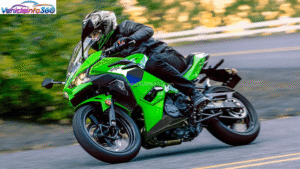
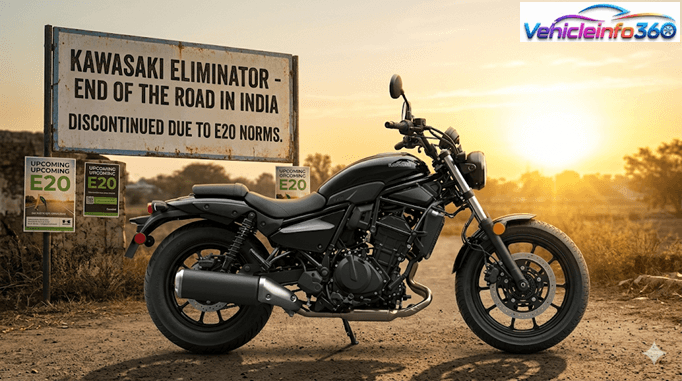
Kawasaki India is reportedly pulling the plug on its 500cc lineup in the country, with the Kawasaki Eliminator discontinued and the Ninja 500 set to follow suit. The primary reason behind this decision is the motorcycles’ incompatibility with India’s new E20 fuel standards, which mandate the use of 20% ethanol-blended petrol.
Both the Eliminator and Ninja 500 are imported as Completely Built Units (CBU), which contributes to their premium pricing and lacklustre sales compared to Kawasaki’s 650cc lineup. This has reportedly made the Japanese brand reluctant to upgrade the engines for E20 compliance.
Why is Kawasaki Discontinuing the Eliminator and Ninja 500?
The decision to discontinue these motorcycles stems from a combination of regulatory and commercial factors:
Also Read : Video: Sundar Pichai Booed at Stanford Graduation 2026, Students Stage Walkout Over Google-Israel Ties
1. E20 Fuel Incompatibility
India has standardized E20 fuel (20% ethanol blend), and all new vehicles must be compliant. The Eliminator and Ninja 500 have not been updated to meet these standards, and Kawasaki apparently has no plans to upgrade them.
Also Read :
2. CBU Import Pricing
Both motorcycles are brought into India via the CBU route, attracting high import duties. This makes them significantly more expensive than their 650cc counterparts, which are assembled locally via the CKD route in Pune.
3. Poor Sales Performance
The premium pricing has resulted in lacklustre sales for the 500cc twins. In contrast, the locally assembled 650cc models like the Vulcan S, Z650RS, and Versys 650, which were updated to E20 compliance in December 2025, perform much better in the market.
4. Common 451cc Engine
Both the Eliminator and Ninja 500 share the same 451cc parallel-twin engine. This means the cost and effort required to update the engine for E20 compliance would apply to both models, further discouraging Kawasaki from investing in the upgrade.
The 451cc Engine: Specifications
Both the Eliminator and Ninja 500 are powered by a 451cc, liquid-cooled, parallel-twin engine with DOHC and four valves per cylinder. While the engine displacement remains the same, there are slight differences in tuning:
| Specification | Kawasaki Eliminator | Kawasaki Ninja 500 |
|---|---|---|
| Max Power | 45 PS @ 9,000 rpm | 45.4 PS @ 9,000 rpm |
| Max Torque | 42.6 Nm @ 7,500 rpm | 42.6 Nm @ 6,000 rpm |
| Transmission | 6-speed | 6-speed |
| Clutch | Assist & Slipper Clutch | Assist & Slipper Clutch |
| Cooling | Liquid-cooled | Liquid-cooled |
| Mileage (Claimed) | 30 kmpl | 26.31 kmpl |
Both motorcycles come with a 6-speed gearbox and assist and slipper clutch.
Also Read : Top 3 Upcoming Kia SUVs in India 2026: Sonet, Syros EV & Sorento
Price Comparison
The CBU route makes the Eliminator significantly more expensive than the Ninja 500, despite sharing the same engine platform.
| Model | Ex-Showroom Price | On-Road Price (Delhi) |
|---|---|---|
| Kawasaki Eliminator | ₹6.16 lakh | ₹7.14 lakh onwards |
| Kawasaki Ninja 500 | ₹5.66 lakh | ₹6.60 lakh onwards |
The Eliminator price in India is approximately ₹50,000 more than the Ninja 500. When comparing Eliminator vs Ninja 500, the Eliminator’s cruiser styling and higher price point contrast with the Ninja 500’s sporty positioning and lower cost.
What Does This Mean for Buyers?
- Available Till Stocks Last: Dealers across India still have the Eliminator and Ninja 500 in stock. Interested buyers can purchase these motorcycles until the existing inventory is exhausted.
- No Updated Models Planned: Once the stock is cleared, Kawasaki does not plan to launch an updated E20-compliant version of either model in India.
- Ninja 500 to Follow: While the Eliminator is expected to be phased out first, the Ninja 500 is also likely to be discontinued eventually.
- Alternative Options: Buyers looking for Kawasaki’s performance offerings can consider the E20-compliant 650cc models, including the Z650RS, Ninja 650, Vulcan S, and Versys 650.
Kawasaki’s E20-Compliant Portfolio
While the 500cc twins are being discontinued, Kawasaki has already updated several other models to comply with E20 fuel norms.
| Model | Engine | Status |
|---|---|---|
| Z650RS | 649cc, parallel-twin | E20-compliant |
| Ninja 650 | 649cc, parallel-twin | E20-compliant |
| Vulcan S | 649cc, parallel-twin | E20-compliant |
| Versys 650 | 649cc, parallel-twin | E20-compliant |
| Ninja 1100SX | 1,099cc, inline-four | E20-compliant |
The 650cc models are assembled locally at Kawasaki’s facility in Chakan, Pune, which helps keep prices competitive compared to fully imported models.
Expert Analysis
The Kawasaki Eliminator discontinued news reflects a broader industry trend. With India’s stricter fuel emission and blending norms, manufacturers are prioritizing models that can be locally assembled and updated cost-effectively.
The CBU route, while offering premium, niche products, makes it financially unviable for brands like Kawasaki to update engines for low-volume models. The decision to pull the plug on the Eliminator and Ninja 500 indicates Kawasaki’s strategic focus on its more popular, locally assembled 650cc and larger-capacity offerings that comply with Indian regulations.
Conclusion
The Kawasaki Eliminator discontinued news marks the end of the road for the Japanese brand’s 500cc twins in India. The primary reasons for this move are E20 fuel incompatibility, the high cost of CBU imports, and poor sales volumes.
While the Eliminator and Ninja 500 will be available until dealer stocks last, Kawasaki is likely focusing on its more successful, E20-compliant 650cc range. For enthusiasts still interested in these motorcycles, now is the time to act before they disappear from showrooms for good.
FAQ Section
Q1: Why is the Kawasaki Eliminator being discontinued in India?
A1: The Eliminator is being discontinued because it is not E20-compliant (incompatible with 20% ethanol-blended fuel) and is imported as a CBU, making it expensive with low sales.
Q2: When will the Kawasaki Eliminator be discontinued?
A2: The Eliminator is available until dealer stocks last, and once they are sold out, Kawasaki will not launch an updated model.
Q3: Is the Kawasaki Ninja 500 also being discontinued?
A3: Yes, the Ninja 500, which shares the same 451cc engine as the Eliminator, is also likely to be discontinued eventually.
Q4: What is the price of the Kawasaki Eliminator in India?
A4: The Eliminator is priced at ₹6.16 lakh (ex-showroom), which is about ₹50,000 more than the Ninja 500.
Q5: Does Kawasaki have any E20-compliant motorcycles in India?
A5: Yes, Kawasaki has updated several models, including the Z650RS, Ninja 650, Vulcan S, and Versys 650, to be E20-compliant.